Use cases
Small-group events
Arrange game nights, study groups, and small celebrations with clear decisions and just enough shared structure.
On this page
Enough structure for an everyday gathering
Book clubs, game nights, study groups, and small celebrations need coordination without turning into a project. Start a huddl with a clear name, share the invitation, and use the parts of the plan that are actually open for discussion.
If the host and venue are settled, focus on timing and attendance. If the date is fixed, compare places. You do not need to reopen an agreed decision merely to involve everyone; ask for input where it can change the outcome.
A repeatable planning routine
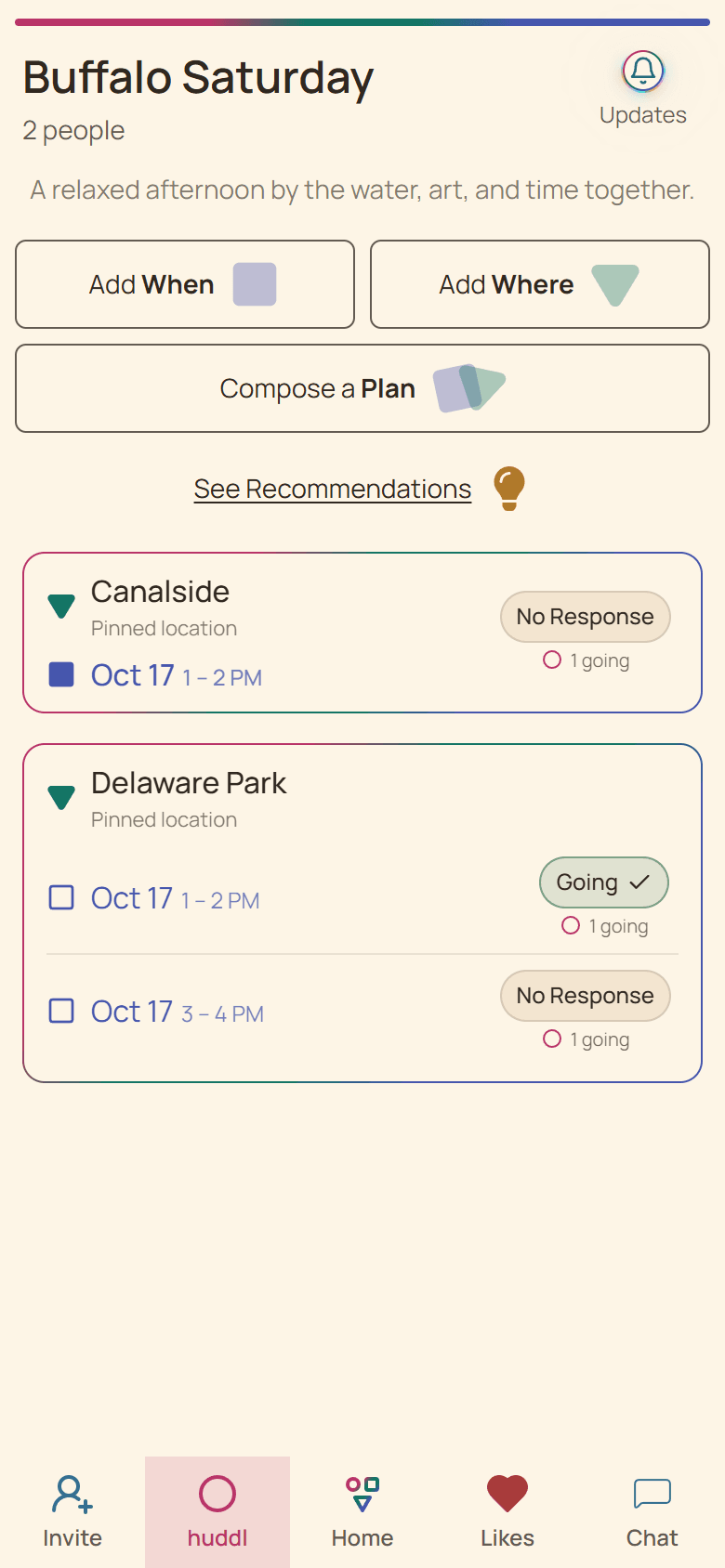
- Describe the gathering, expected duration, and who it is for.
- Suggest options for the decisions that are still open.
- Gather responses and explain the chosen place and time.
- Ask for RSVPs to the concrete plan.
- Assign a few useful tasks and share a concise final summary.
Example: a game night with limited seats
A host has space for eight people and wants to choose a night. Share a few dates first, then collect RSVPs once the time is set. Make the capacity clear and coordinate additions with the host rather than assuming an invitation can accommodate unlimited guests.
Use tasks for bringing a game, snacks, or extra chairs. State what is already covered so people do not all volunteer for the same item. A short summary on the day is more useful than making participants scroll through every suggestion.
Keep the current plan easy to find
For a group that meets repeatedly, identify the date or occasion in the relevant plan and discussion. Keep old arrangements from being mistaken for the next gathering. Huddl keeps context connected, but clear names and messages still make coordination better.
Helpful huddl features
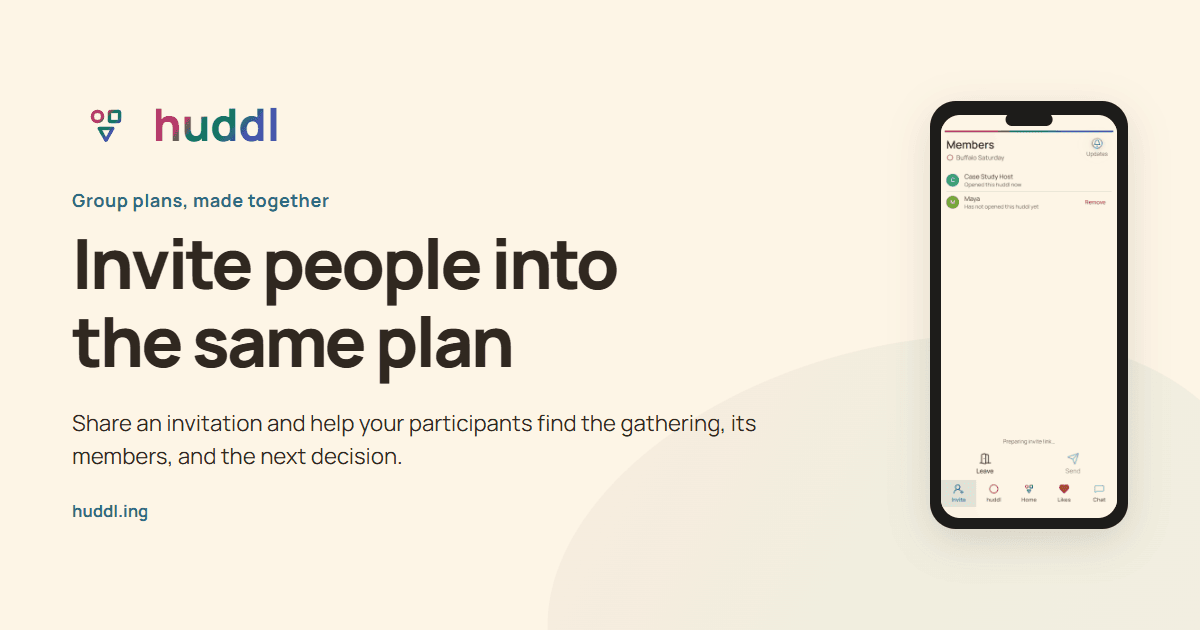
Invite people into the same plan
Share an invitation and help your participants find the gathering, its members, and the next decision.
Explore feature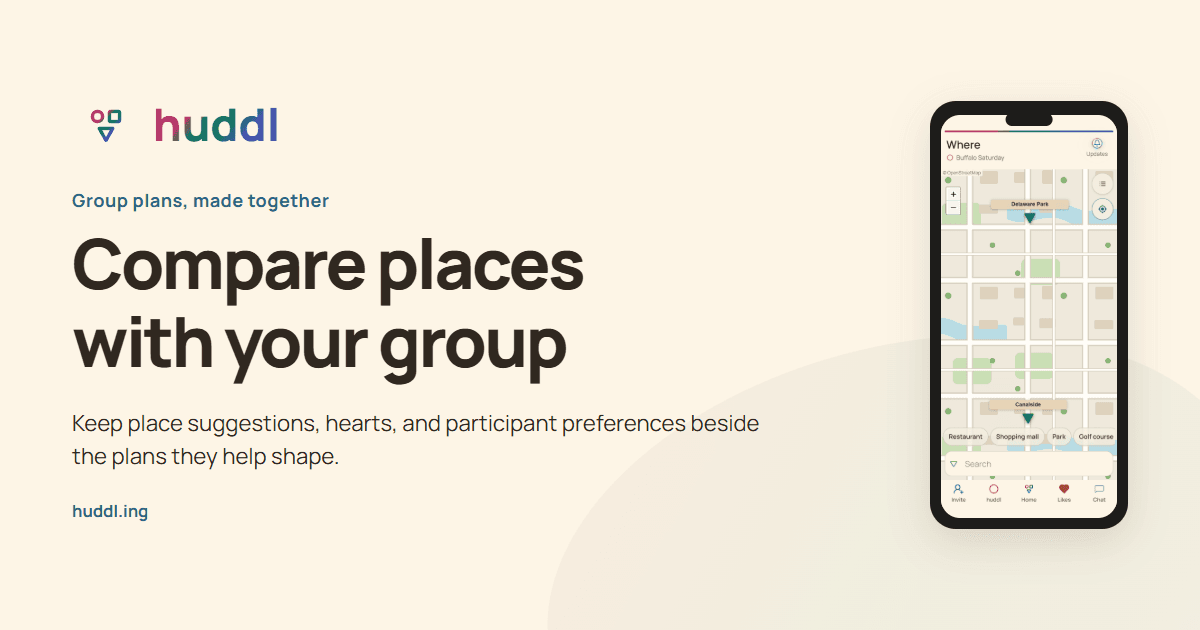
Compare places with your group
Keep place suggestions, hearts, and participant preferences beside the plans they help shape.
Explore feature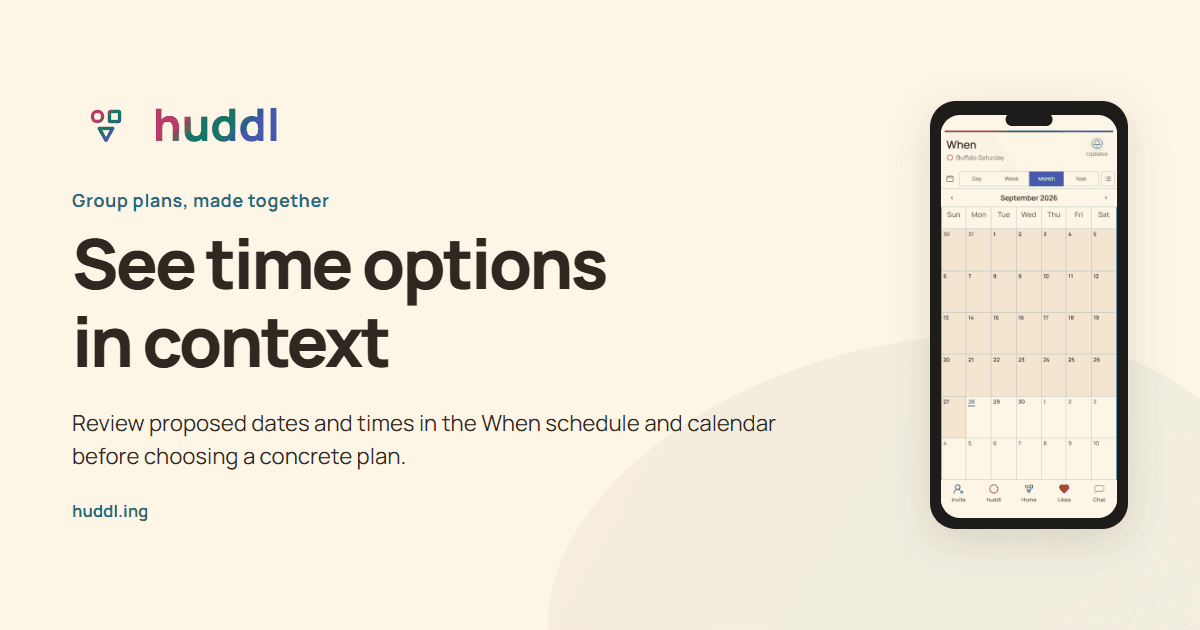
See time options in context
Review proposed dates and times in the When schedule and calendar before choosing a concrete plan.
Explore feature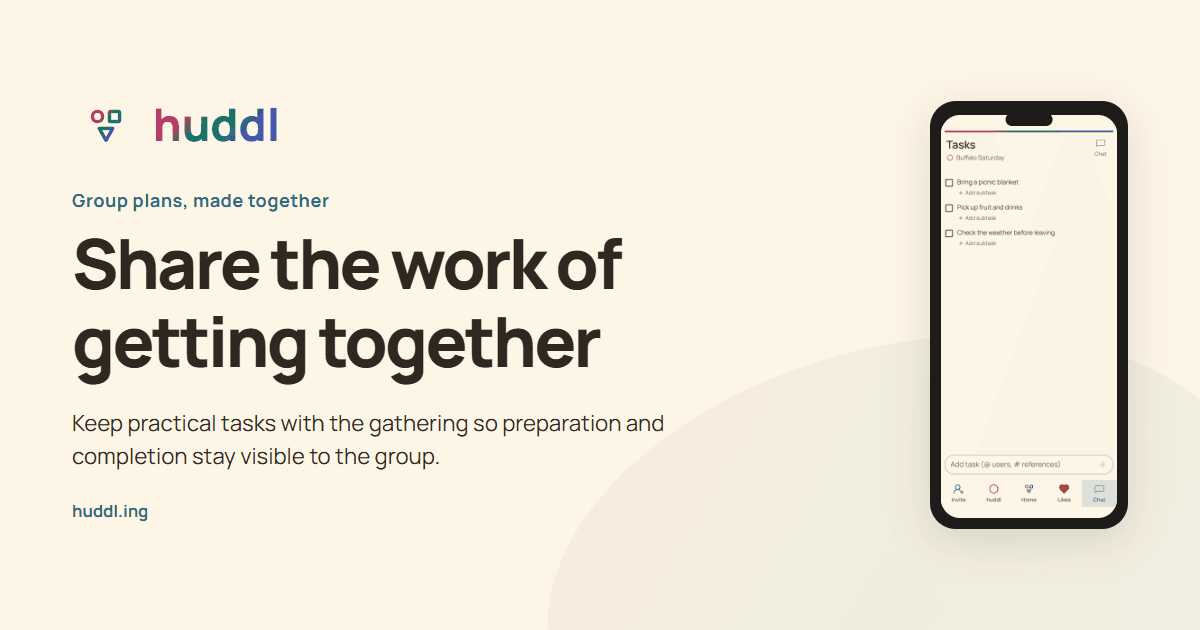
Share the work of getting together
Keep practical tasks with the gathering so preparation and completion stay visible to the group.
Explore feature