Features
Share the work of getting together
Keep practical tasks with the gathering so preparation and completion stay visible to the group.
On this page
Product states in this journey
These controlled fictional examples were captured from the current application.
Turn preparation into clear outcomes
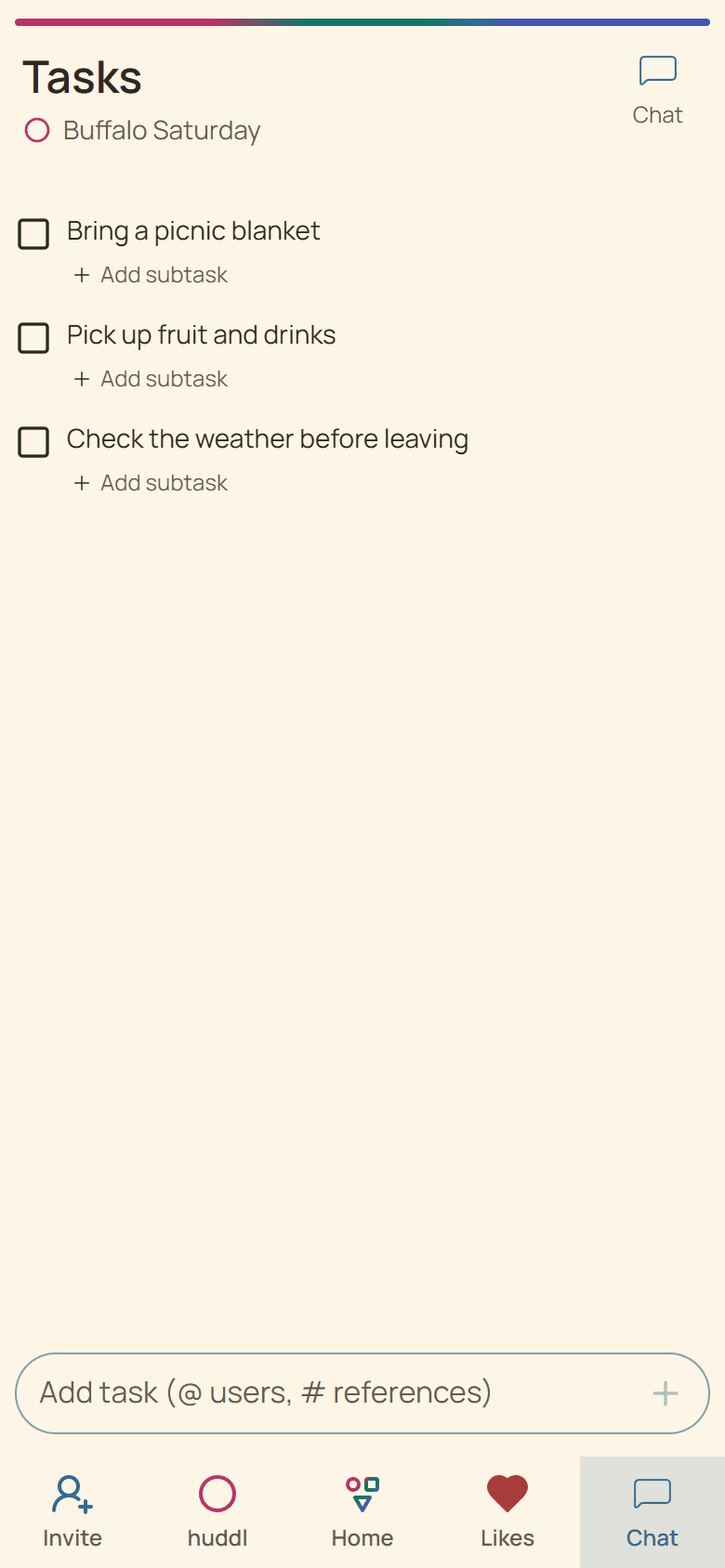
Getting together often involves work beyond choosing a date. Someone needs to bring equipment, confirm a booking, or check the entrance. Tasks keeps that work attached to the huddl instead of leaving it buried among suggestions and reactions.
Write an outcome that another person can understand: ?Bring a picnic blanket? or ?Confirm the table for six.? A vague task such as ?Sort everything? leaves the group unsure what remains. Keep unrelated responsibilities separate so completion has a clear meaning.
Agree on responsibility
Discuss who will take each task in Chat. Include a useful deadline or constraint in the task text when preparation depends on it. Do not assume the app automatically assigns a volunteer or sends a deadline reminder just because the task mentions a date.
For a potluck, ask who can bring a main dish, drinks, and serving equipment. One person may coordinate several contributions, but the group should understand that arrangement before relying on it. The task list records the practical work; the conversation supplies agreement and context.
Make completion informative
Mark a task complete after the outcome is achieved. If others need details, add a short message: the booking name, meeting entrance, or number of items collected. Completing ?Buy tickets? without explaining how participants receive them still leaves an important gap.
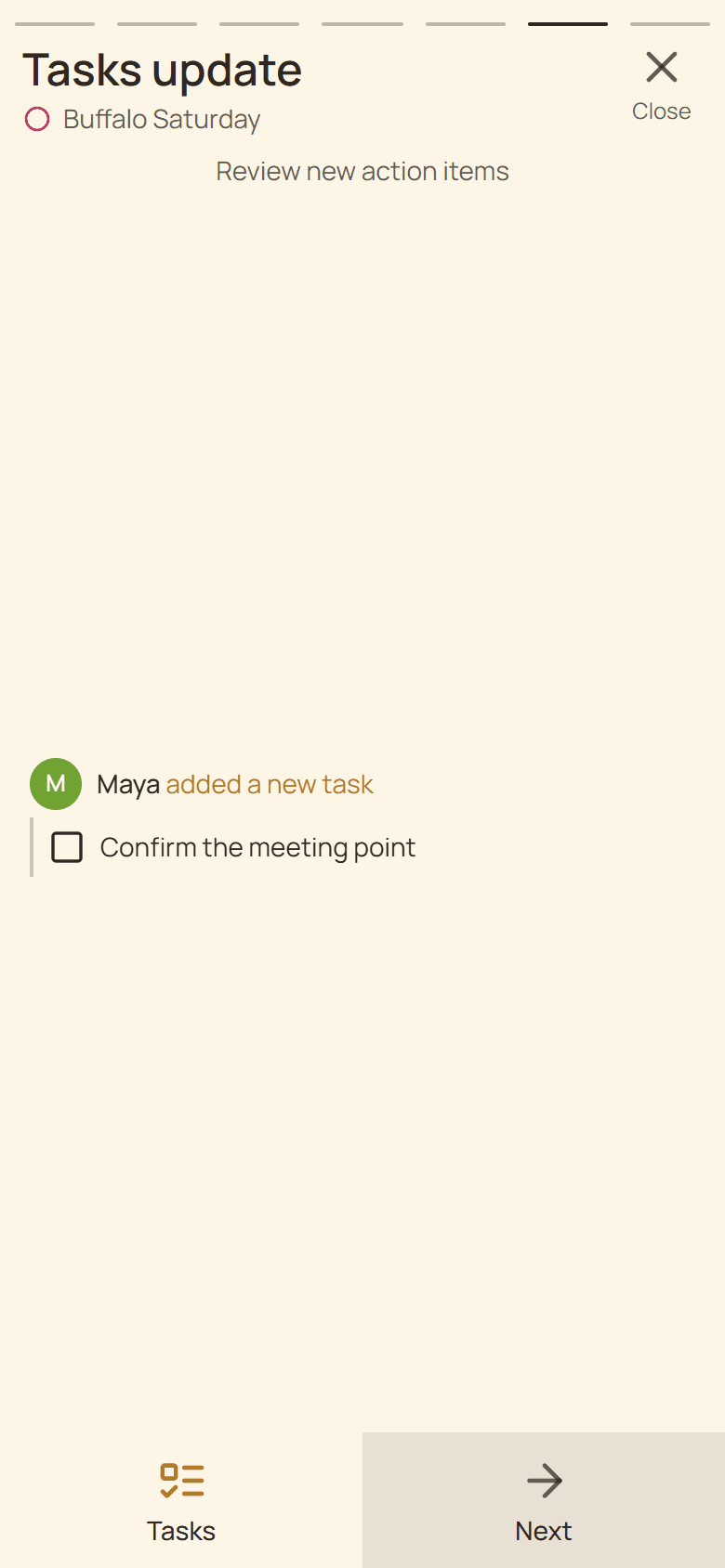
Tasks remains accessible from the shared footer. You can review the list without replaying all the group?s Updates. Before the gathering, check both completed work and anything still open so you can spot a dependency that has been overlooked.
Keep the list proportionate
A small dinner may need only one booking task. A volunteer meetup may need supplies, arrival instructions, and cleanup. Add enough structure to help the group, then remove unnecessary work through the available controls. If circumstances change, discuss the impact before marking an obsolete task complete; completion should communicate an outcome people can trust.