Guides
How to collect clear RSVPs
Ask for attendance confirmations that produce a useful headcount without confusing preferences with commitments.
On this page
See this in Huddl
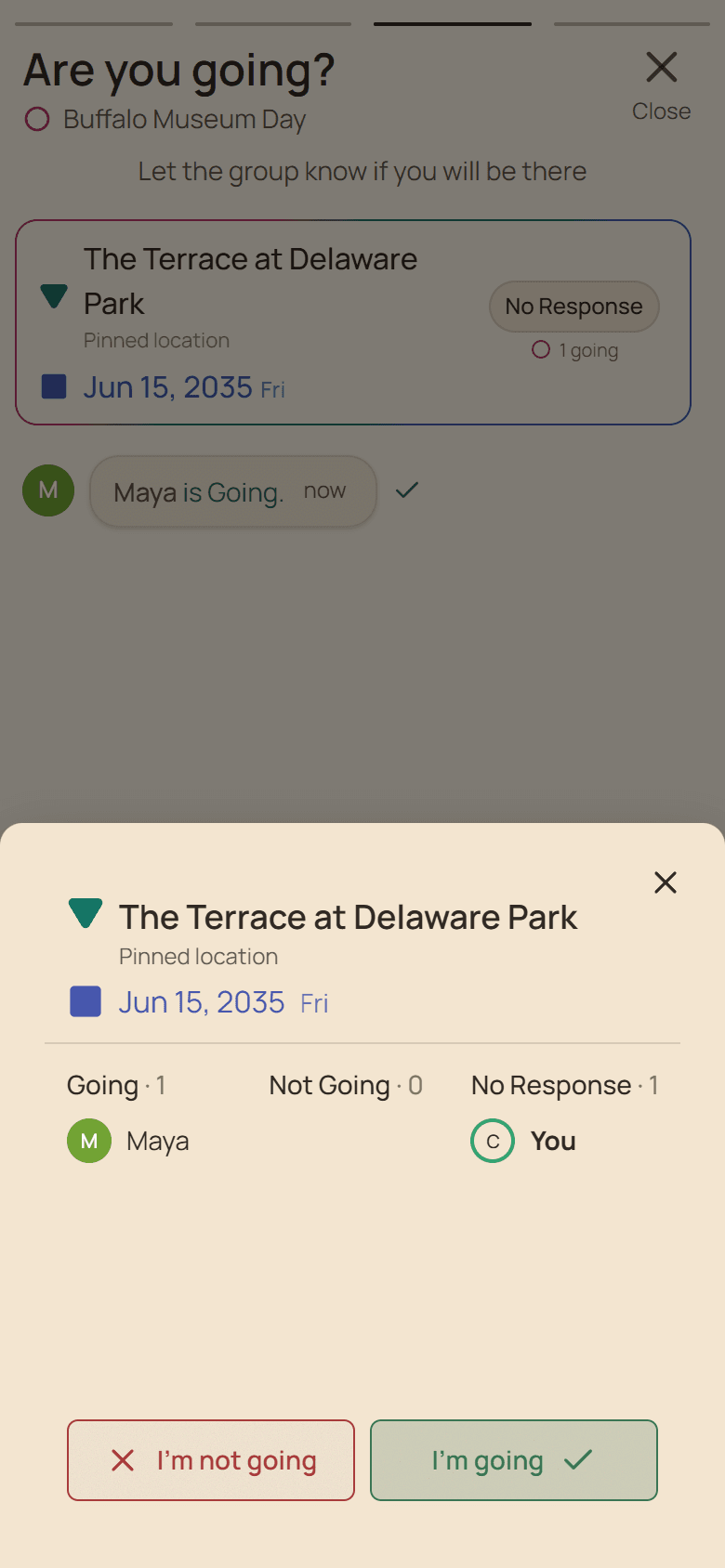
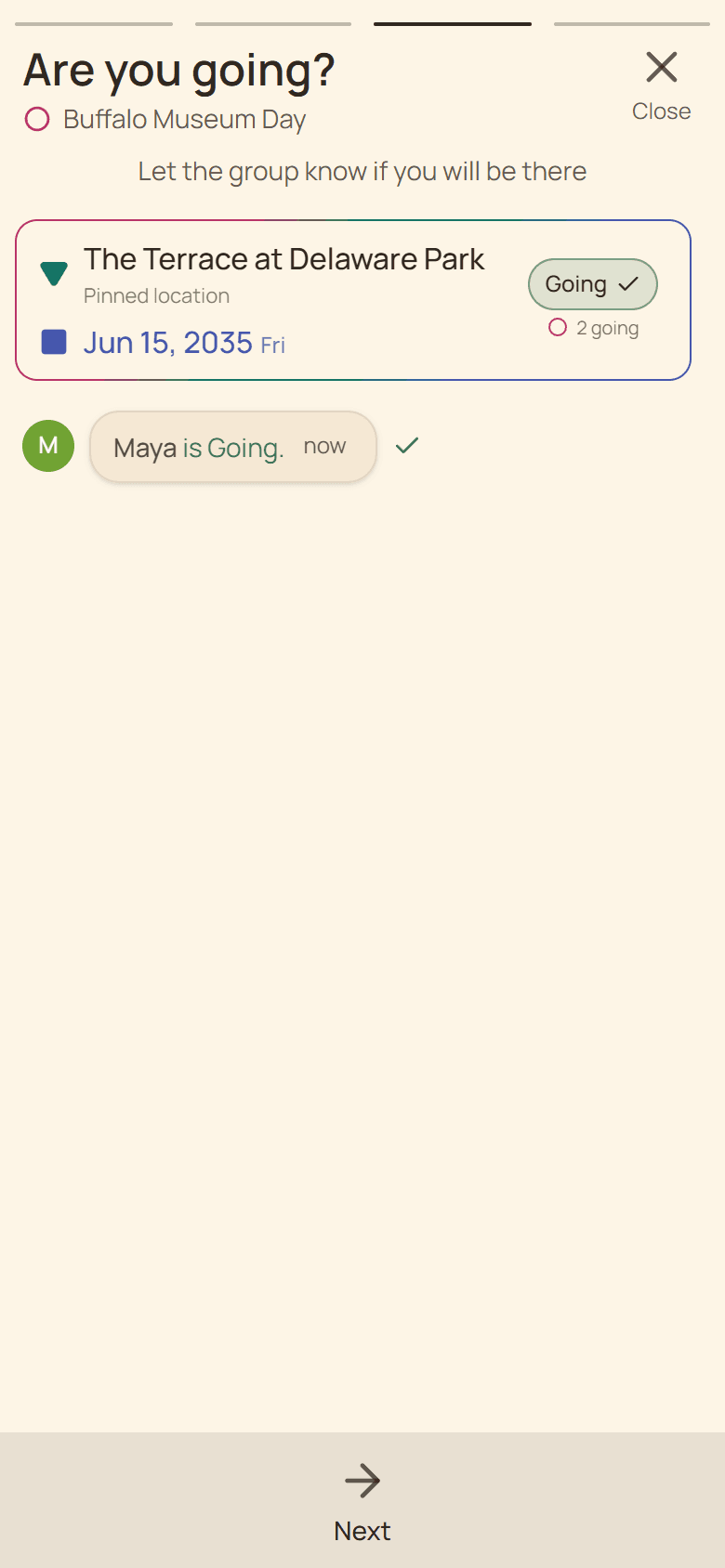
Follow the guide with these controlled fictional examples from the current application.
Ask after the plan is concrete
An RSVP answers a specific question: will you attend this plan? Give people the place, date, time, likely cost, and any important expectations before asking. A thumbs-up on an early idea does not tell you whether someone can attend the final arrangement.
If you need a headcount for a booking, explain that dependency. People are more likely to answer clearly when they know why Thursday’s response deadline matters.
Make the response easy
Use a short request with the essential details and a deadline. For example: “Dinner is Saturday at 7:30 p.m. at the café on King Street. Please RSVP by Thursday evening so we can confirm the table.” Keep the final plan available alongside the request.
Ask people to update their answer if circumstances change. Declining should be straightforward; a clear no helps the organizer more than silence. If someone is uncertain, explain when you need a final answer rather than counting them as going.
- Publish the concrete place, date, time, and expectations.
- Request an explicit attendance response.
- Set a deadline based on the booking or preparation need.
- Send one targeted reminder to unanswered participants.
- Confirm the count and make later changes visible.
Example: booking a table for the right number
Eight people liked the dinner idea, but only five have confirmed the final plan. The booking count should reflect confirmed attendance, with uncertain places handled according to the restaurant’s conditions. Do not silently turn interest into a financial commitment.
If partners, children, or other guests are included, ask for the additional headcount explicitly. An individual response may represent one person, while the organizer’s food and seating plan needs a household total.
Handle changes without blame
People’s plans change. Ask participants to update their RSVP and notify the person responsible for a booking when a change affects cost or capacity. Keep any cancellation terms visible before people commit.
For an unanswered participant, use a concise reminder that repeats the deadline and the action. Avoid sending a whole new discussion thread that creates two competing versions of the plan.
- Count confirmed attendance separately from early interest.
- Clarify additional guests and household totals.
- Share booking conditions before asking for a commitment.
- Review the current count before spending or reserving.
Keep RSVPs with the plan in huddl
Participants can RSVP to a concrete place-and-time plan in Huddl. Keep the meaning distinct from reactions to suggestions. If a gathering has several possible plans, identify the one your headcount refers to. Check the current responses before finalizing a booking.
Put it into practice
Friends
Dinner with friends
Choose a restaurant and time, gather RSVPs, and keep the reservation details in one shared dinner plan.
Read the workflow
Everyday groups
Small-group events
Arrange game nights, study groups, and small celebrations with clear decisions and just enough shared structure.
Read the workflow