Guides
How to share planning tasks
Divide bookings, rides, food, and setup into clear tasks with willing owners and visible outcomes.
On this page
See this in Huddl
Follow the guide with these controlled fictional examples from the current application.
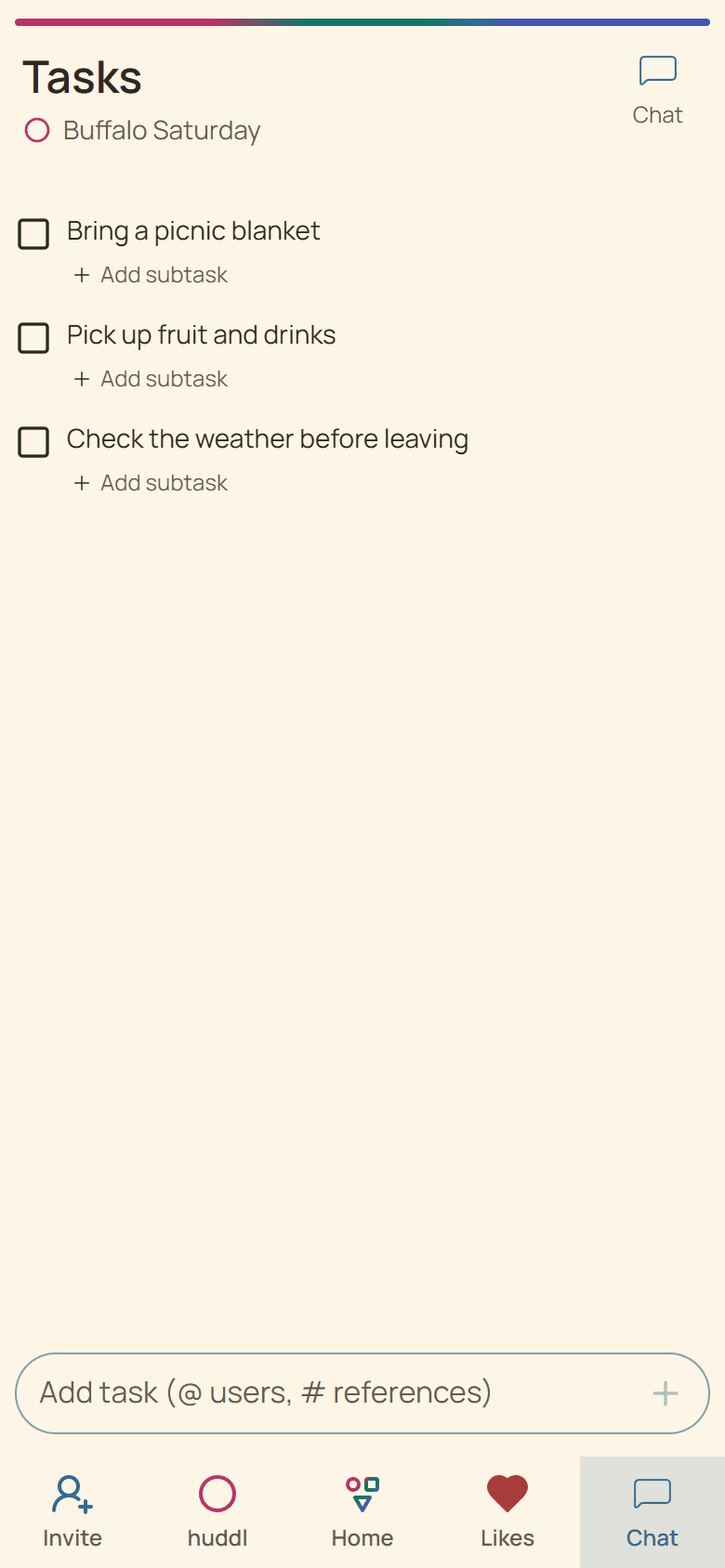
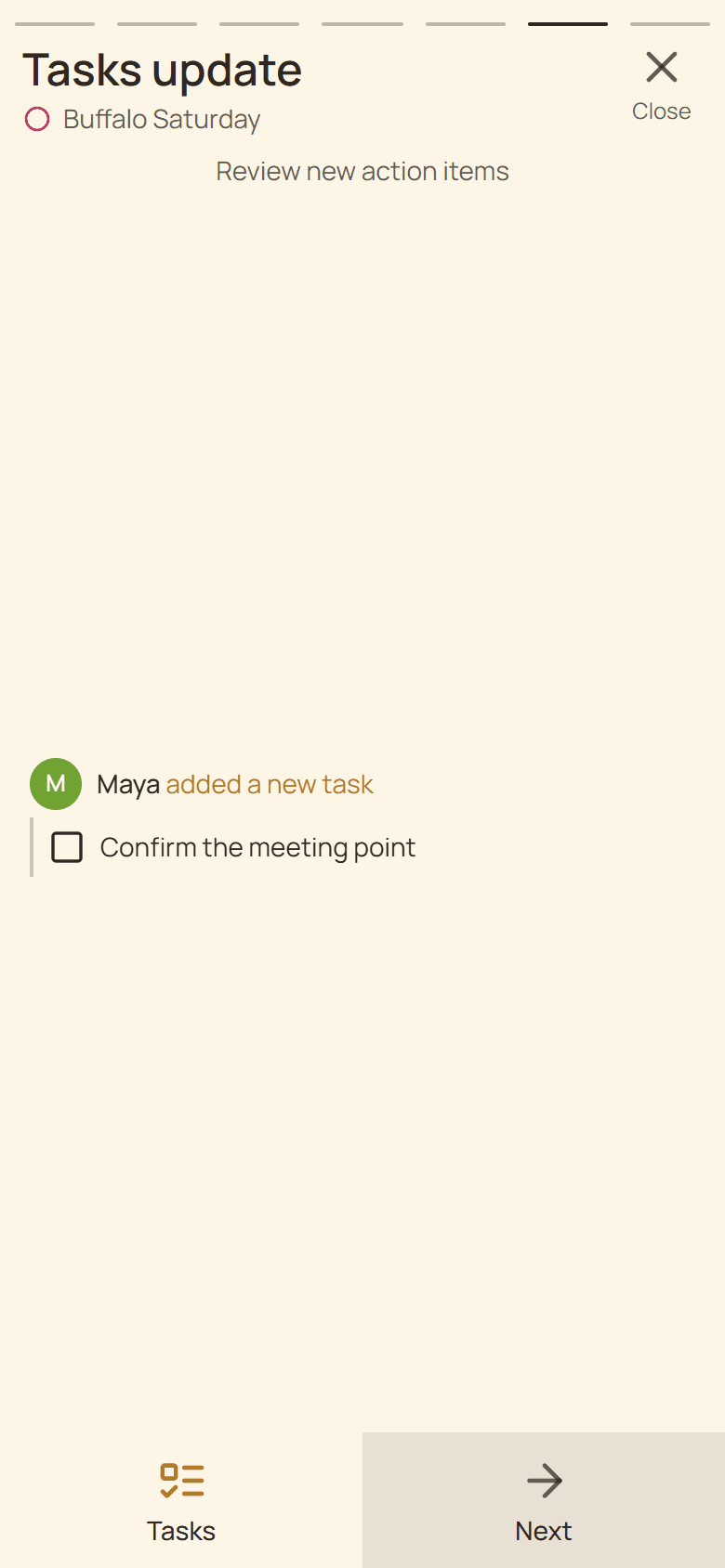
Name the outcome
“Sort the outing” is too broad to hand over. “Buy six tickets for Saturday’s 2 p.m. entry by Thursday” describes a result another person can deliver. Begin with the decisions already made, then identify the practical work still needed.
Keep the task list proportional to the gathering. A dinner may need only a reservation and transport check. A community meetup may need room setup, supplies, a welcome contact, and cleanup.
Give each task a willing owner
Ask who can take responsibility rather than assuming the most responsive participant will do everything. An owner coordinates the result; they can ask for help, but the group knows who to check with.
Include a deadline only where it is useful. Bookings may need to happen before availability changes, while snacks can wait until the headcount is known. Make dependencies visible so someone does not spend money before the group has committed.
- List the outcomes that make the gathering possible.
- Separate large or unrelated responsibilities.
- Confirm a willing owner for each task.
- Add the relevant deadline, budget, and dependency.
- Record completion with the details others need.
Example: sharing a family lunch
The host provides the space, one person coordinates food, another arranges a ride, and someone brings extra chairs. “Bring food” is still vague: specify what is needed, for how many people, and whether a dietary requirement matters. Tell volunteers what is already covered.
If the ride depends on the final finish time, resolve that before assigning pickup. If the owner cannot complete the task, ask them to say so early so another person can take it on without a day-of scramble.
Make completion useful to everyone
A task being marked done is helpful, but the group may need the result as well. For a reservation, share the name, time, headcount, and conditions. For tickets, explain how participants will receive or use them without exposing sensitive booking information publicly.
Before the day, review unfinished tasks and remove work that is no longer needed. Keep the final summary short enough that participants can identify the place, time, and anything they personally need to do.
- One clear outcome per task.
- One person responsible for coordinating it.
- A realistic deadline and budget where relevant.
- A completion update with usable details.
Use tasks and chat together in huddl
Huddl keeps tasks and the planning conversation attached to the gathering. Use tasks for responsibility and chat for questions, constraints, and outcomes. This keeps practical work from disappearing among reactions to places and times.
Put it into practice
Families
Family gatherings
Coordinate dates, travel, food, and shared responsibilities for a family gathering without losing the details.
Read the workflow
Friends and families
Weekend outings
Keep destinations, timing, transport, and weather decisions together when arranging a weekend outing.
Read the workflow