Guides
How to choose a meeting place
Compare travel, cost, access, and practical details to choose a venue that works for your group.
On this page
See this in Huddl
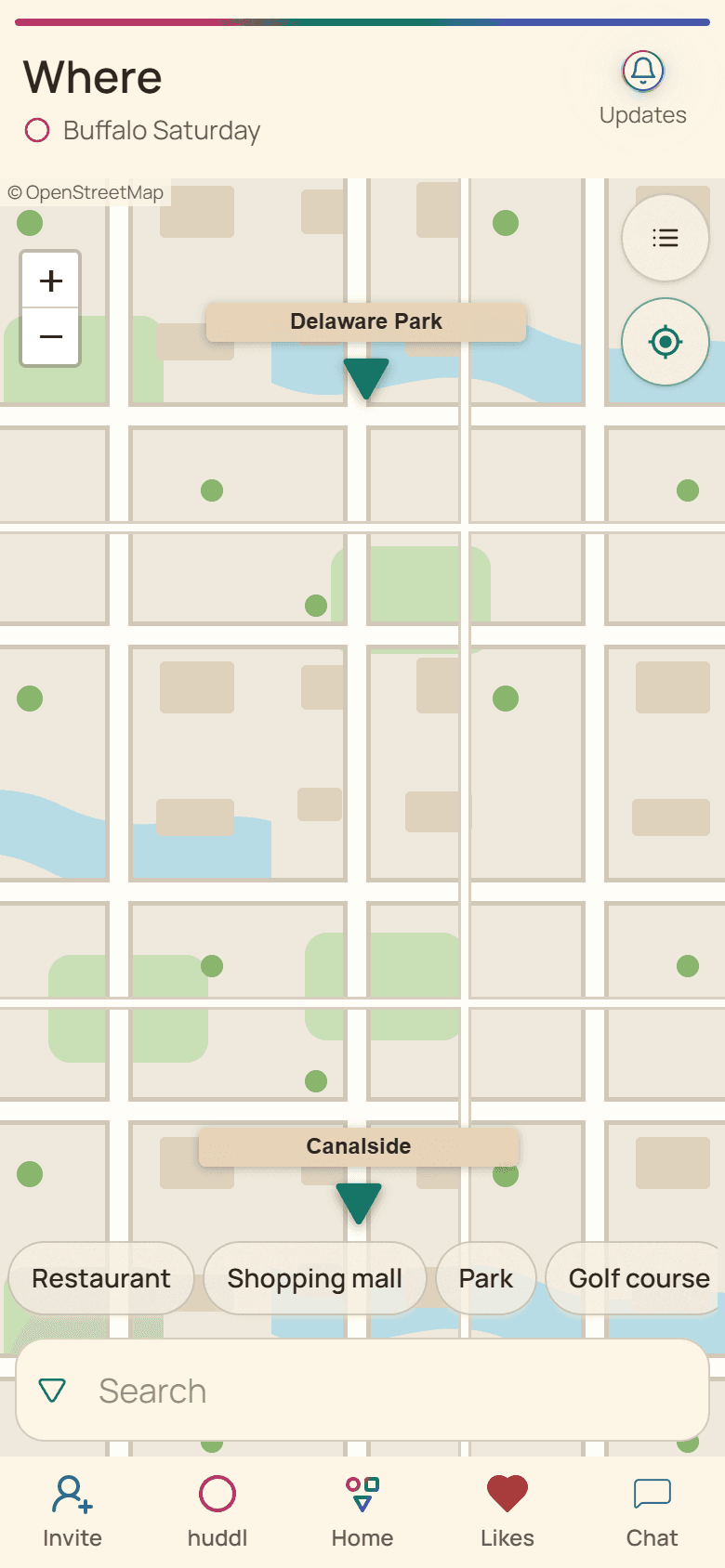
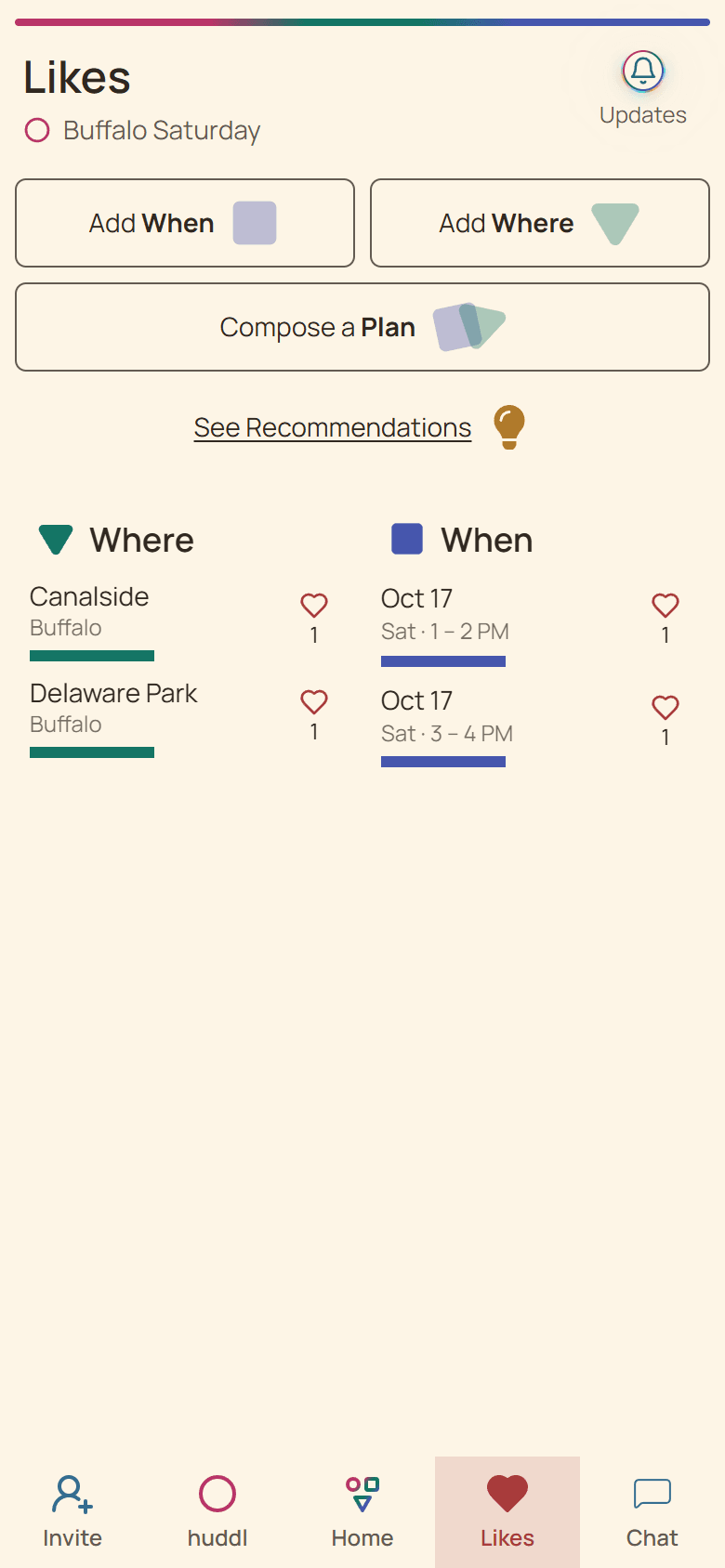
Follow the guide with these controlled fictional examples from the current application.
Start with the group’s needs
The best meeting place is one the group can use comfortably. Ask about likely budget, travel limits, food requirements, accessibility, and the kind of conversation or activity you want. Give people a private way to share sensitive requirements.
Separate essential requirements from preferences. Step-free access may be essential; a particular cuisine may be a preference. This prevents an attractive shortlist from excluding someone before the discussion begins.
Compare a short, credible list
Two or three venues with a clear reason for inclusion are easier to assess than ten unexplained links. Compare the same practical information for each: travel, cost, opening times, available space, and booking requirements.
Map distances are only part of travel. Check the route at the hour people will arrive, including public transport, parking, and the walk from the stop. A central location may still be difficult for someone who needs a particular entrance or step-free route.
- Travel: can people reach it and get home at the planned hour?
- Cost: are prices and payment expectations acceptable?
- Access: has the relevant entrance, seating, or facility been checked?
- Activity: is the noise level and space suitable?
- Booking: are capacity, deposits, and cancellation terms understood?
Example: a restaurant for a mixed group
One restaurant is popular but requires a deposit and has a narrow menu. Another is slightly farther away but offers suitable food and a reliable booking. If someone has a food requirement, check the venue’s own information or contact it rather than relying on a review that says “something for everyone.”
Share the tradeoffs in plain language. “This option costs a little more, but everyone can eat there and the booking is confirmed” gives the group a useful basis for deciding.
Verify details before committing
Listings and map data can be outdated. Check opening hours, availability, access, and any conditions directly with the venue. Assign the booking to a person and give them the expected headcount and deadline.
Once the venue is chosen, state the street address, exact entrance, reservation name, and meeting time. For a park or large building, name the specific meeting point. Share private-home details only with the intended participants.
- Check essential requirements with the group.
- Compare a few venues using the same practical criteria.
- Verify the preferred venue’s details directly.
- Book if needed and record the conditions.
- Publish clear arrival instructions and a backup contact method.
Keep the decision connected in huddl
Add place suggestions to the huddl and use the conversation to explain practical constraints. Reactions show preferences, while a concrete plan ties the selected location to a time. Keep booking and entrance details beside that plan so late arrivals can find them.
Put it into practice
Friends
Dinner with friends
Choose a restaurant and time, gather RSVPs, and keep the reservation details in one shared dinner plan.
Read the workflow
Communities
Club and community meetups
Give club members and newcomers a clear meetup plan, useful arrival instructions, and shared setup tasks.
Read the workflow