Guides
How to handle last-minute plan changes
Communicate a changed place or time clearly, check acknowledgment, and keep one current version of the plan.
On this page
See this in Huddl
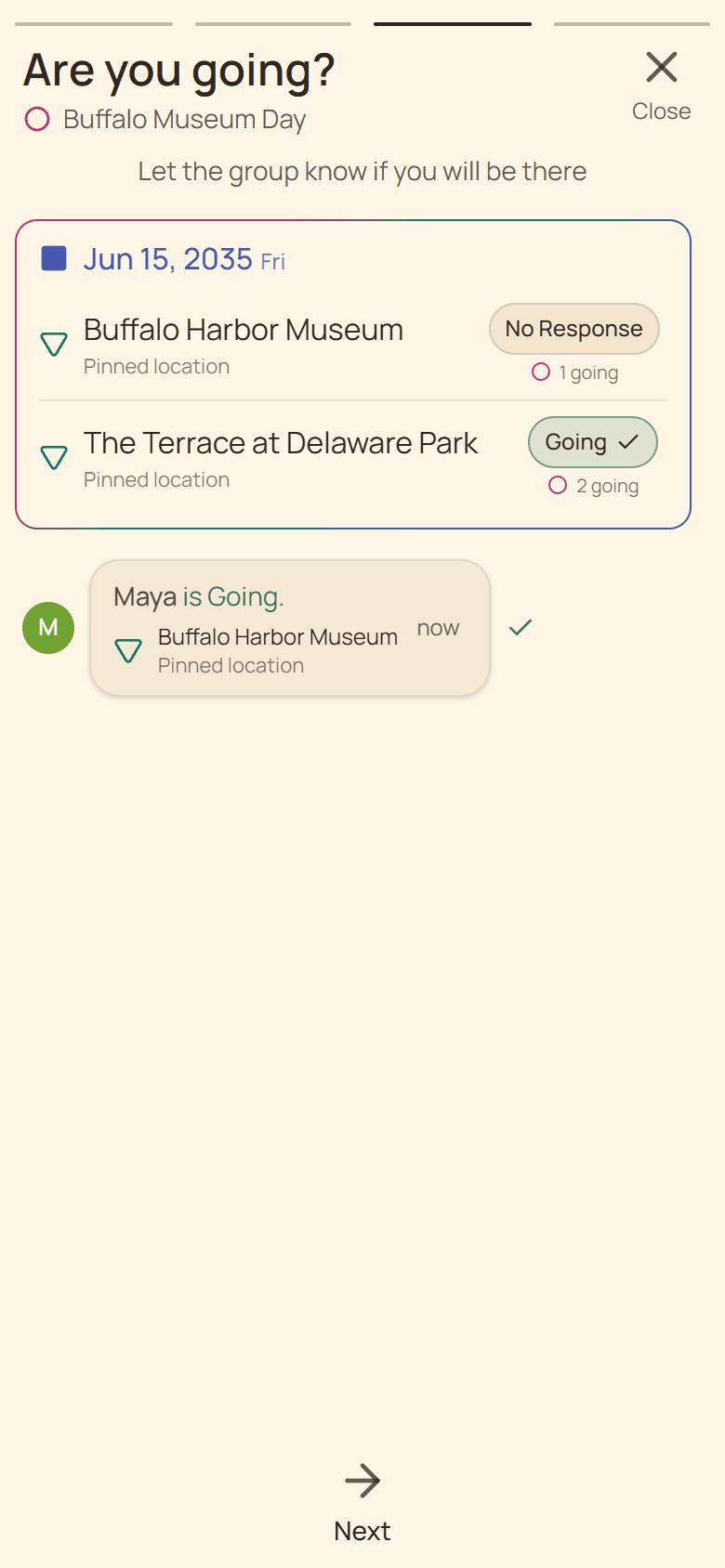
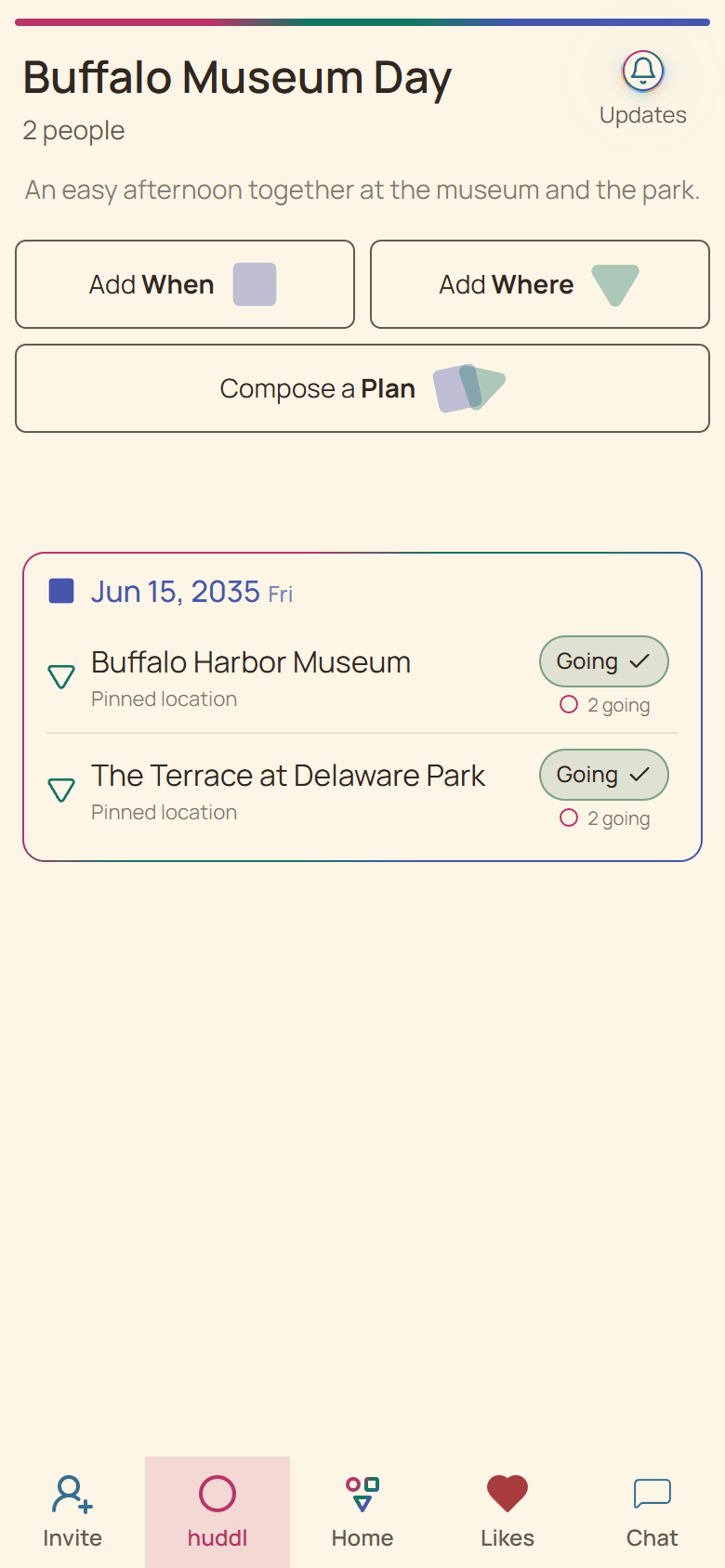
Follow the guide with these controlled fictional examples from the current application.
Decide what changed before announcing it
A closed venue, delayed train, or weather problem can create several competing suggestions. First establish whether the plan is changing, what the alternative is, and who is coordinating the decision. If the answer is still uncertain, say when the group will hear the final update.
Check whether the change affects travel, cost, access, bookings, or someone’s ability to attend. A nearby alternative is not automatically suitable for every participant.
Send a complete update
Name the gathering and state the new place or time. Include the old detail only to make the change unmistakable, then say what remains the same and what participants need to do. Avoid a message that says only “we moved” or “half an hour later.”
For example: “Saturday dinner is now at the King Street café instead of the park restaurant. The time is still 7:30 p.m. Please reply to confirm you have seen the new venue.” Include the exact address or entrance if there is any ambiguity.
- Confirm the replacement arrangement and its practical implications.
- Update the shared plan or clearly identify the replacement plan.
- Send one complete message explaining the change.
- Ask affected participants to acknowledge it.
- Contact anyone already traveling through a direct channel.
Do not rely on delivery alone
A notification being sent does not prove that someone has read it. Permissions, preferences, connectivity, and device behavior all affect delivery. Calendar subscriptions may also take time to refresh.
If the change is urgent, check acknowledgment and use a direct message or call for someone who has not responded. Choose a contact method the group understands in advance, especially for outdoor outings or venues with poor reception.
Example: switching an outdoor meetup indoors
Rain makes a park gathering impractical. The organizer checks that an indoor venue can fit the confirmed group and that its cost and access are acceptable. The new message includes the venue, entrance, unchanged start time, and an explicit acknowledgment request.
One participant is already on the way to the park. A direct call prevents them from waiting at the old meeting point. Afterward, the group confirms the revised attendance and updates any transport or supply tasks.
Keep one current source of truth
Update the huddl context and identify the current concrete plan so old suggestions are not mistaken for the replacement. If people can no longer attend, ask them to update their response. Review bookings and tasks affected by the change.
A backup plan agreed earlier reduces the number of decisions made under pressure. Keep it specific: where the group goes, when the decision is made, and who sends the update.
Put it into practice
Communities
Club and community meetups
Give club members and newcomers a clear meetup plan, useful arrival instructions, and shared setup tasks.
Read the workflow
Friends and families
Weekend outings
Keep destinations, timing, transport, and weather decisions together when arranging a weekend outing.
Read the workflow